

HELICOPTER MANUFACTURING IN THE UK
An analysis for aerospace supply chain businesses in the South East, examining the current landscape, the pivotal contract decisions, and the technological shifts defining the road to 2026.
The Current Landscape: Strength Under Pressure
Currently, the UK remains one of the few nations globally with end-to-end capability to design, build, and support helicopters. This capability is anchored primarily by Leonardo Helicopters in Yeovil, supported by Airbus Helicopters’ significant presence in Oxford and North Wales, and underpinned by a world-class supply chain—much of which resides here in the South East.
However, the current atmosphere is one of palpable frustration. The sector is highly dependent on defence spending, and the repeated delays to the Ministry of Defence’s New Medium Helicopter (NMH) programme—intended to replace the aging Puma and other medium-lift assets—have created a damaging "holding pattern."
For suppliers in the South East, who often provide high-value components, advanced composites, software integration, and precision tooling to Tier 1s, this uncertainty freezes investment and complicates long-term workforce planning.
The South East Advantage
Why does this matter specifically to the South East? While final assembly may happen elsewhere, the intellectual vitality of the UK aerospace sector is heavily concentrated here.
The region’s strength lies in high-value-add technologies: complex electronics, autonomous systems, sensor integration, and advanced materials. These are precisely the areas where modern helicopter platforms compete. A new platform isn't just about bending metal; it’s about the millions of lines of code and integrated defensive aids suites that South East firms excel at producing.
Furthermore, proximity to key hubs like Farnborough (and its world-leading airshow) and London’s financial and governmental centers gives South East firms a unique gravitational pull for R&D and partnership opportunities.
The Horizon: What Will Happen in 2026?
Assuming the political landscape stabilizes and procurement processes unblock, here is the likely scenario for the UK helicopter sector by 2026.
1. The NMH Reality Check
By 2026, the winner of the NMH contract (estimated value £1bn+) must not only have been announced but be deep into the initial industrialization phase.
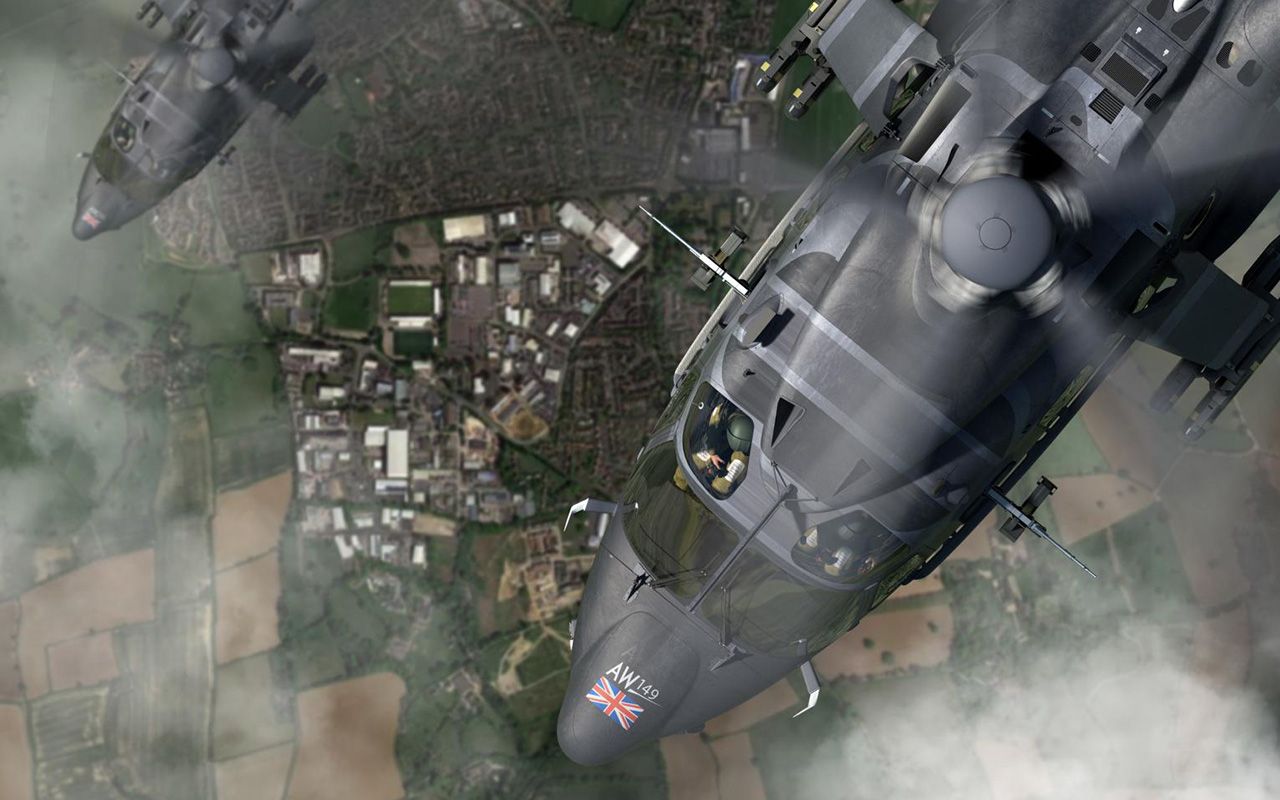
The Scenario: If Leonardo’s AW149 wins, 2026 will see intense activity in Yeovil to stand up the production line. For the South East supply chain, this is the "best-case" scenario for immediate volume orders, as Leonardo has committed to 60-70% UK content.
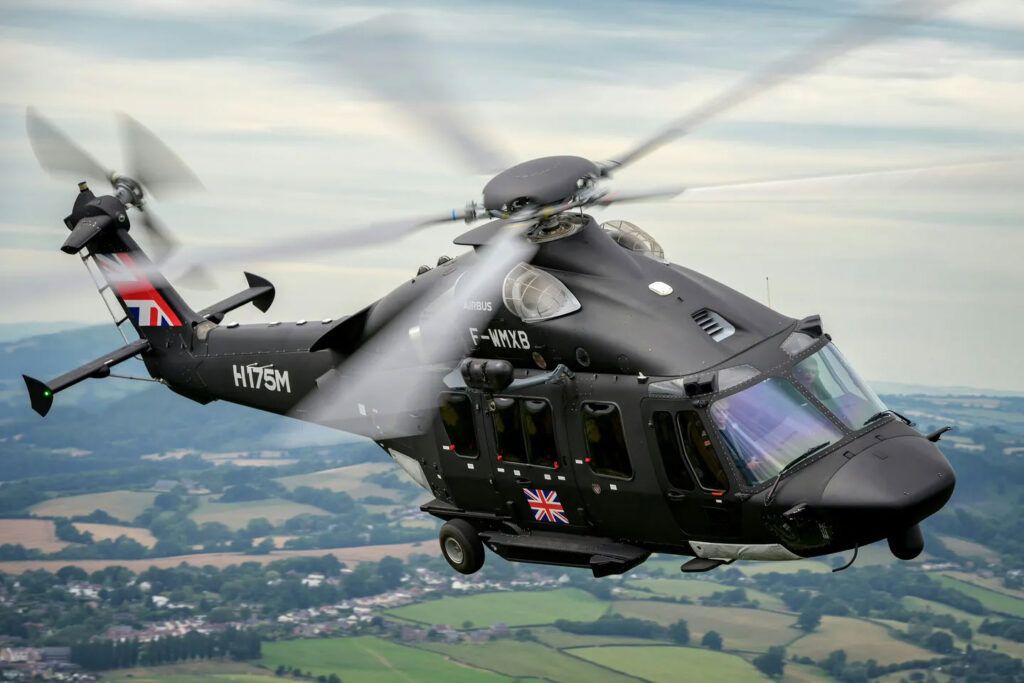
The Alternative: If Airbus (H175M) wins, the focal point shifts to Broughton, Wales, though their established Oxford footprint offers opportunities for South East service and support firms. A Lockheed Martin (Black Hawk) win, while offering proven capability to the MoD, is generally viewed as offering the least potential for UK manufacturing supply chain engagement.
Prediction for 2026: The NMH winner will be mobilizing. Suppliers who pre-positioned themselves with the winning OEM during 2024/25 will see order books opening. Those who waited will be scrambling for residual contracts.
2. The Export Imperative
Domestic orders alone cannot sustain the UK’s industrial base. By 2026, the focus will have shifted aggressively toward exports.
Leonardo has made it clear that a UK NMH win is crucial to unlock global export markets for the AW149. If that domestic anchor is secured, 2026 will see the UK actively marketing "UK-built" platforms to Middle Eastern and European allies. South East exporters of dual-use aerospace technology should prepare for a push into these markets, piggybacking on major platform sales.
3. The "Next Generation" Begins to Blur Lines
While traditional helicopters dominate current revenue, 2026 will be the year Advanced Air Mobility (AAM) and eVTOLs (electric Vertical Take-Off and Landing) move from prototypes to early commercial reality.
UK leaders like Vertical Aerospace will be pushing for certification. For South East manufacturers, the distinction between a "helicopter supplier" and an "eVTOL supplier" will start to vanish. Both require lightweight composites, advanced batteries, high-integrity fly-by-wire systems, and electric propulsion.
Prediction for 2026: Progressive South East aerospace firms will no longer just be bidding on rotorcraft contracts; they will be leveraging the same core competencies to supply the burgeoning AAM sector.
4. Sustainability as a Gatekeeper
By 2026, sustainability will have moved from a corporate responsibility slide to a procurement gatekeeper. OEMs like Airbus and Leonardo are heavily focused on Sustainable Aviation Fuel (SAF) compatibility and hybrid-electric propulsion R&D.
Tier 2 and 3 suppliers in the South East will increasingly find that demonstrating a low-carbon manufacturing process, or contributing technologies that improve aircraft efficiency, is a prerequisite to getting on a bid list.
Strategic Takeaways for South East Manufacturers
The period between now and 2026 is not a time for passive waiting.
Maintain Agility on NMH: Continue dialogue with all three NMH contenders, but intensify focus on the likely frontrunners who promise high UK content. Understand their specific supply chain gaps.
Diversify into AAM: If you make high-precision, safety-critical components for helicopters, you are already 80% of the way to being an eVTOL supplier. Engage with the AAM startups now before their supply chains calcify.
Digitalize or Die: The ramp-up for programs in 2026 will demand seamless digital integration with OEMs. Industry 4.0 adoption (digital twinning, automated inspection) will be the differentiator between winning work and being deemed too high-risk.
Sharpen the Value Proposition: South East firms cannot compete on cheap labour. Compete on speed of innovation, complexity of integration, and closeness to the R&D hubs.
Conclusion
2026 promises to be a year of execution after
years of deliberation. The UK helicopter sector has a bright future, but realization of that future depends heavily on decisions made in Westminster in the coming months. South East manufacturers must remain resilient, ready to pivot instantly once the green light is given.
Executive Summary
For aerospace manufacturing businesses across the South East—from the precision engineers along the M3 corridor to the avionics specialists surrounding Farnborough—the UK helicopter sector represents a vital, yet currently volatile, opportunity.
As we look towards 2026, the sector is poised at a critical juncture. We are currently in a period defined by high stakes government procurement delays and rapid technological evolution. The next eighteen months will determine whether the UK cements its position as a global hub for next-generation rotorcraft or faces a challenging contraction.
This outlook outlines the current state of play and forecasts the likely realities of 2026, providing strategic context for suppliers preparing their order books.
This is an overview of the very recent press landscape concerning the UK helicopter manufacturing sector as of January 2026.
The media narrative surrounding the Ministry of Defence’s (MoD) New Medium Helicopter (NMH) programme has shifted significantly over the last few months. What were once "warnings" about industrial gaps in 2024 and early 2025 have now escalated into reports of existential threats to the UK's sovereign capability to design and build helicopters.
The press coverage is almost entirely focused on the severe consequences of the decision still not having been made, creating an atmosphere of acute crisis in the sector.
Here is a summary of the key themes dominating recent headlines and industry reports:
1. Leonardo and the "Yeovil Cliff Edge"
The most prominent stories center on Leonardo Helicopters in Yeovil, the UK’s only end-to-end helicopter manufacturing site.1 The narrative has moved from managing a production gap to facing imminent closure of manufacturing lines.
- The "Final Warning" Narratives: Recent press reports have featured stark quotes from Leonardo leadership. The central message is that the "holding pattern" is no longer sustainable. Reports indicate that existing production work on the AW159 Wildcat and AW101 Merlin for export customers is concluding rapidly.
- Redundancy Fears: There has been widespread coverage of potential large-scale redundancies at the Yeovil site. Unions have told the press that without an NMH decision imminently to allow for industrial ramp-up, the highly skilled workforce required to build helicopters will begin to be dispersed, making a restart fast impossible.
- The "Assembly Only" Threat: Financial press have speculated that if the Yeovil site ceases manufacturing operations due to the gap, Leonardo might downgrade its UK presence to maintenance, repair, and overhaul (MRO) only, permanently outsourcing manufacturing to its Italian or Polish facilities.
2. The Loss of "Sovereign Capability"
Beyond the immediate job losses, the defence and political press are focusing heavily on the strategic implications.
- A One-Way Door: Defence analysts quoted in recent articles argue that once end-to-end design and manufacturing capability is lost, it is prohibitively expensive and practically impossible to recreate. The press is framing the NMH delay not just as a procurement issue, but as a decision to voluntarily abdicate a top-tier industrial capability held by very few nations.
- National Security Implications: In light of continued global instability, commentators are questioning the wisdom of relying entirely on foreign supply chains for crucial military lift assets.
3. Political and Union Fury
The political fallout from the continued delays has been intense over the winter of 2025/26.
- Cross-Party Pressure: There have been reports of intense lobbying from MPs across the political spectrum representing constituencies with aerospace interests (including the South West and the South East supply chain hubs). They are accusing the Treasury and MoD of "industrial vandalism" through inaction.
- Union Mobilization: Unite the Union has been very vocal in the press, warning that the government is "sleepwalking into an industrial disaster." They have been highlighting the discrepancy between government rhetoric on "growing the economy" and allowing a jewel in the manufacturing crown to rust due to bureaucratic paralysis.
4. The Supply Chain Contagion
While Yeovil is the headline, specialist manufacturing press has begun to focus on the wider ecosystem, which is highly relevant to the South East.
- SME Insolvency Risks: Reports indicate that Tier 2 and Tier 3 suppliers, who do not have the balance sheets of giants like Leonardo or Airbus, are already suffering. Having tooled up in anticipation of an NMH decision in 2024/25, many are now facing a cash flow crisis.
- Brain Drain: Engineering publications are reporting an exodus of talent from the rotorcraft sector into other industries that are currently booming, such as AI, civil nuclear, and general tech, further eroding the skills base needed if NMH is ever awarded.
Summary of Current Sentiment
The prevailing mood in the press as of January 2026 is one of disbelief and urgency. The narrative is no longer about who will win the NMH contract, but whether there will be a UK helicopter manufacturing industry left to fulfill it by the time the signature dries on the page.